For property managers, HOAs and condos
Property managers and boards get a written scope by section, a phasing plan with notices for residents, and photos before and after. We provide license and certificate of insurance for the file.

Sun, rain and standing water are what age asphalt in South Florida. Crack sealing and sealcoat are the cheapest way to slow that down, and the easiest maintenance to put off until it is too late.
Asphalt is held together by a binder that dries out and oxidizes under UV. That is why a lot goes from black to gray in a couple of summers, and why the surface starts to ravel and shed stone. Sealcoat puts a new protective layer over that surface. Crack sealing does the more important job: it keeps water from getting through the asphalt into the limerock base, which is what turns a hairline crack into a pothole after one rainy season.
We seal cracks with hot-pour rubberized sealant routed or cleaned out first, so it bonds instead of peeling out in a month. Then we clean the lot, patch any failed spots with hot mix, and apply sealcoat in two coats with sand for traction. Because we also stripe, the lot gets new markings and ADA stalls before it reopens, in one mobilization.
Sealcoat is maintenance, not a repair. If the lot is alligator-cracked, rutted or holding water, sealing over it is a waste of money; we will tell you that during the walk-through and price the repair or overlay it actually needs.
Cracks cleaned, blown out and filled with rubberized hot sealant that stays flexible through the summer.
Two coats of commercial-grade sealer with sand for traction, applied by squeegee and spray.
Failed spots saw-cut and replaced with hot-mix asphalt so the sealcoat goes over sound pavement.
New layout or restripe after sealing, including ADA stalls, fire lanes, arrows and curb paint.
Sections closed in phases or done overnight and on weekends so residents and customers keep parking.
Residential asphalt driveway crack fill and sealcoat, once the asphalt is at least 90 days old.
Property managers and boards get a written scope by section, a phasing plan with notices for residents, and photos before and after. We provide license and certificate of insurance for the file.
For a home driveway we fill cracks, patch soft spots and seal in one visit. Keep cars off for 24 to 48 hours depending on heat and humidity.
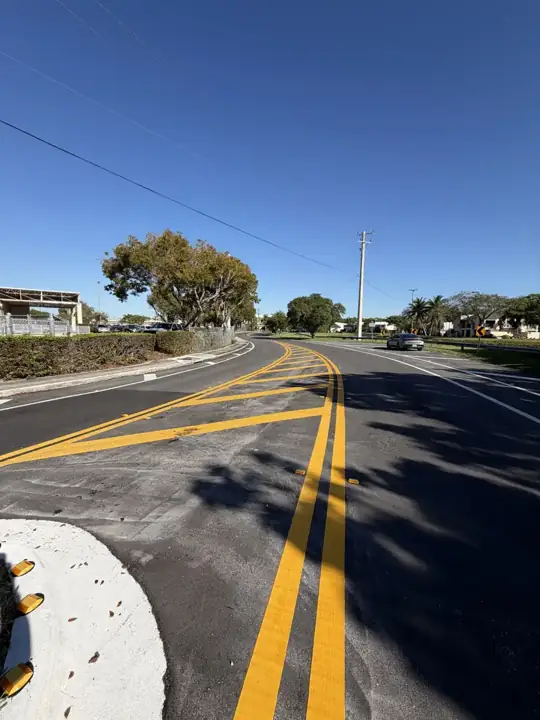
Striping and pavement markings on Village of Palmetto Bay resurfacing projects and parking areas on private developments in Miami. Every sealcoat job we do is followed by our own striping crew.
See our striping work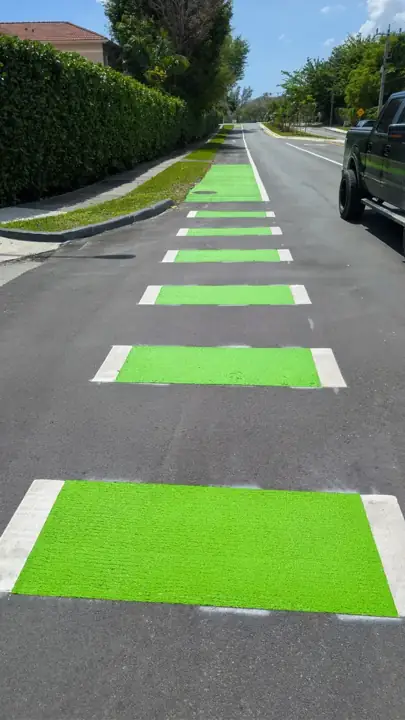
Typically every two to three years for a commercial lot, depending on traffic and sun exposure, with crack sealing every year or two in between. A lot that is resealed on schedule can go many years longer before it needs to be milled and resurfaced.
No. Sealcoat is a surface coating; cracks have to be sealed separately first, and failed areas patched. Sealcoat over open cracks just hides them for a few months.
Usually 24 hours in normal summer conditions, sometimes longer when it is humid or overcast. We phase the work so part of the lot is always open.
Wait at least 90 days after paving so the asphalt can cure. Sealing too early traps the oils and can leave the surface soft.
Sealcoat needs a few dry hours to set, so we schedule around the forecast and work early in the day in the rainy season. If rain is coming, we move the date rather than gamble.
Call, text us photos on WhatsApp, or send the form. Written proposal within 48 hours for most jobs.